Guaranteed, Professional Roof Replacement Services in Tampa
We replace residential and commercial roofs across Tampa, FL using GAF Master Elite® installation standards, full-code permit coordination, and in-house crews who document every material specification and inspection checkpoint. Roof Bear does the careful inspections and thorough documentation you need when dealing with insurance claims, storm damage, and warranty work—because these jobs don't leave room for cutting corners.

A Smooth and Stress-Free Roof Replacement & Related Services
Licensed & Recognized Tampa Roofing Contractor
- GAF Master Elite® and President's Award Contractor (top 1% nationally)
- Florida license CCC1334010 held by Tyler Nerland
- 4.8 stars across 200+ Google reviews
- GAF Commercial Certified and GAF Solar Certified
- Owens Corning Preferred Contractor
- Over 7,000 roof installations completed in Florida
- 48 in-house employees, no subcontractors
- 30-year shingle warranty available
- $0 down financing options with approved credit

Managing Partner · Technical Oversight Lead · Veteran
Hector manages every Roof Bear installation and is personally named in dozens of customer reviews for his transparency, craftsmanship, and above-and-beyond service. GAF Master Elite® and President's Club certified. Veteran-owned.
Reviewed by Hector Marin. License Number CCC1334010 held by Tyler Nerland · Verified by Florida DBPR
Why Tampa Roofs Require Full Replacement
Most homeowners call us after a leak appears or an insurance adjuster flags wind damage following a named storm. By that point the underlying failure has often spread beyond what patch repairs can address. Architectural shingles in Tampa face relentless UV exposure, thermal cycling that cracks sealant bonds, and periodic high-wind events that lift tab edges and compromise the waterproofing envelope. When multiple shingles show granule loss, curling, or missing sections, isolated repairs create a patchwork of old and new materials with mismatched weathering rates and no unified warranty coverage.
Tile roofs present a different failure pattern. Individual tiles crack from foot traffic or hail impact, but the real vulnerability lies in the underlayment. Florida's intense heat accelerates felt degradation, and once moisture reaches the decking, rot spreads along truss lines faster than surface inspection reveals. We routinely document cases where a homeowner replaced a dozen broken tiles over several years, only to discover during a full replacement that the sheathing beneath had delaminated across forty percent of the roof plane. Partial repairs on a compromised substrate leave the home exposed and void manufacturer warranties that require complete system installation.
Insurance claim timing introduces a separate urgency. Many carriers in Florida now apply strict depreciation schedules and require claims within twelve months of a documented storm event. A roof that could limp along another season in a stable market becomes a financial liability when policy nonrenewal notices arrive. Between 70 and 90 percent of storm-related insurance claims include roof damage according to the Insurance Institute for Business & Home Safety, and a denied or underpaid claim often traces to delayed reporting or insufficient documentation of the original event. Replacing your roof quickly helps you keep your insurance payout and protects your home's structure before water damage spreads and doubles your repair costs.
Diagnostic Inspection and Material Failure Documentation
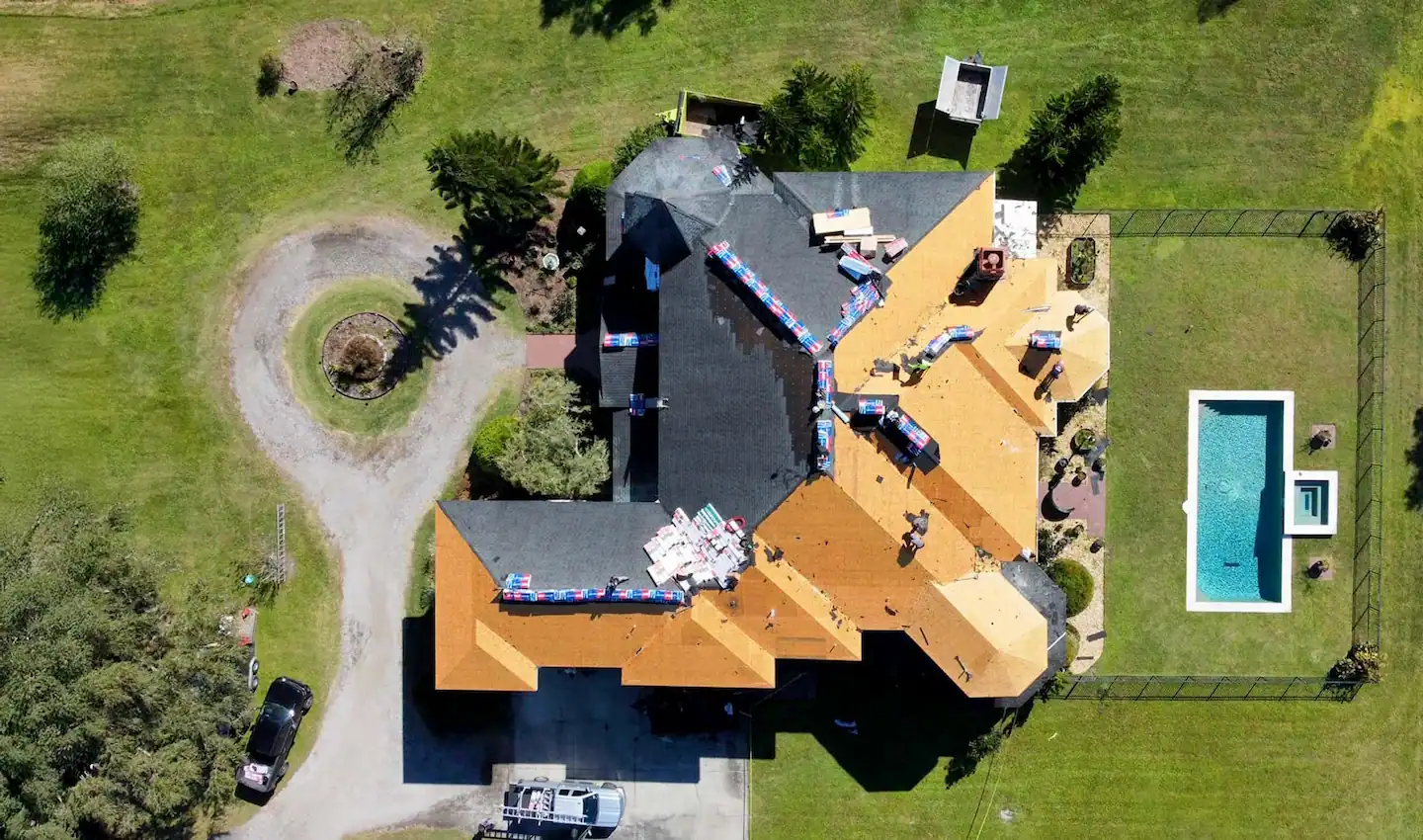
We begin every replacement project with a full roof plane inspection using drone-mounted high-resolution imaging and, where leaks or thermal anomalies are suspected, handheld infrared cameras. Neil Allen wrote in a review that since there was no visual damage, Rich used a drone and his thermal imaging camera, and the leak was found and corrected within the hour. That diagnostic sequence is standard for us. The drone captures every roof facet at an angle that reveals shingle seal failure, flashing separation, and tile displacement invisible from the ground. Thermal imaging maps moisture intrusion through temperature differentials, showing us where water has migrated behind cladding or saturated insulation.
We document every defect with time-stamped photos geo-tagged to roof coordinates, then compile the findings into a condition report indexed by material type, failure mode, and code reference. If wind damage is evident, we cross-reference observed uplift patterns against ASCE 7 wind load zones and note whether existing fastener spacing meets current Florida Building Code attachment schedules. That documentation becomes the foundation for permit applications, insurance adjusters' review, and our material specification worksheet.
Permitting, Code Compliance, and the 25 Percent Rule
Every roof replacement in Tampa requires a building permit unless the project covers 500 square feet or less, per the Florida Building Code's repair exemption. We submit permit applications to the City of Tampa Construction Services division along with engineered drawings, wind load calculations, and product approval documents for every component of the roofing assembly. Permit fees run approximately $150 to $600 based on the construction valuation, according to the City of Tampa fee schedule.
Florida's 25 percent rule often confuses homeowners. Roofs predating that threshold remain subject to full code upgrade requirements when 25 percent or more is replaced. We evaluate the installation date using permit records, manufacturer date codes on existing materials, and aerial imagery archives, then advise the homeowner whether partial replacement triggers a full system upgrade. That determination affects material cost, structural reinforcement, and timeline, so we make the call before any contract is signed.
As of October 20, 2025, the City of Tampa Development and Growth Management team utilizes VuSpex, a virtual building inspections tool, available Monday to Friday 8:00 a.m. to 3:20 p.m. We coordinate all required inspections, including rough framing if decking replacement is necessary, underlayment and flashing installation, and final assembly, submitting video documentation through the city's portal when virtual inspection is appropriate and scheduling in-person visits when structural modifications require direct examination.
Emergency Stabilization and Storm-Damage Tarping
When we assess a roof after storm damage, we tarp any compromised sections before the estimate process begins. Stephanie Craig wrote in a review that we were the only company that tarped the roof, checked on it multiple times and through a storm, before giving an estimate, while others were quick to give a price but had no concern about the leak. That sequence is intentional. Allowing additional water intrusion between inspection and contract signing compounds the damage we're being asked to repair and creates liability ambiguity. Our crews carry 6-mil polyethylene sheeting, treated lumber for cant strips, and pneumatic fasteners loaded with ring-shank nails rated for high-wind attachment. We anchor tarps to roof planes using sandbag ballast on tile and direct fastening through shingle roofs into rafters identified with stud finders, then return every 48 hours to inspect tie-down integrity until replacement work begins.
Lyle Dean noted in his review that we made time to check out the roof, help tarp it up to keep any further water from penetrating, and helped guide him in the insurance process. Emergency tarping integrates directly with insurance claim documentation. We photograph the tarp installation, log the date and time, and provide the homeowner with a written summary of the temporary protection measures, which insurers require to demonstrate mitigation of ongoing loss. That documentation also establishes the condition baseline for the adjuster's inspection.
Insurance Coordination and Claims Documentation
We do not require work authorization forms that transfer claim control to the contractor. Jessica Ellis wrote in a review that eight out of ten companies she contacted required signing a work authorization form, which she later learned is a scammy way of getting to control the insurance claim to get more money, and that Roof Bear was one of two companies that did not require anything to be signed nor did we ever bring up her insurance claim. We treat every client as a direct customer looking for an estimate, regardless of whether insurance will cover the work.
When a homeowner asks us to support the claims process, we provide detailed material breakdowns, labor cost itemization by phase, and code-reference justifications for every scope item. We attend adjuster inspections when requested, walk the roof with the adjuster to point out failure modes and storm-event correlation, and respond to carrier engineering requests with product data sheets and installation photos from comparable projects. Our estimate format matches Xactimate line-item conventions, which most Florida carriers use for claim valuation, reducing disputes over scope interpretation. We do not accept assignment of benefits, which means the homeowner retains full claim ownership and payment authority.

Tear-Off, Decking Inspection, and Substrate Preparation
We perform complete tear-offs rather than overlay installations. Florida's heat and humidity accelerate underlayment degradation, and layering new material over old traps moisture and conceals structural defects. Our crews strip all existing shingles, tiles, or metal panels down to the roof deck, then inspect every sheet of sheathing for delamination, rot, sagging, or fastener withdrawal. We use a moisture meter to confirm decking moisture content below fifteen percent before proceeding. Any sheathing that fails the bounce test, shows black mold staining, or has pulled free from rafter attachment gets marked with spray paint and replaced with CDX plywood or oriented strand board meeting Miami-Dade NOA product approval standards.
We also verify rafter spacing and truss bracing at this stage. Older Tampa homes sometimes have 24-inch on-center framing that requires thicker sheathing or additional blocking to meet current load tables. If structural modifications are necessary, we halt work, notify the homeowner and the permit inspector, and submit a revised engineering drawing before resuming. That pause costs a day but prevents a failed final inspection or, worse, a wind-uplift failure under load.
Underlayment, Flashing, and Waterproofing Assembly
We install synthetic underlayment rated for high-temperature exposure across the entire roof plane, lapping each course four inches with proprietary sealing tape along horizontal seams. Valleys receive ice-and-water shield or a secondary layer of self-adhering membrane extending eighteen inches beyond each valley centerline. Eaves and rakes get a continuous strip of self-adhering membrane from the fascia edge to six inches past the interior wall line, which exceeds code minimum and guards against wind-driven rain that penetrates beneath the first shingle course.
Flashing replacement is non-negotiable. We remove all existing step flashing, counter flashing, and apron flashing around chimneys, skylights, soil stacks, and wall intersections, then fabricate new flashing from kynar-coated aluminum or copper, depending on material compatibility with the finish roof. Step flashing at sidewalls is woven into each shingle course and sealed with polyurethane caulk rated for UV exposure. Chimneys receive a two-piece counter-flashing system with a reglet cut into the masonry and filled with polyurethane sealant. Pipe boots use EPDM rubber collars with stainless hose clamps, not the neoprene press-fit boots that crack under Florida sun within five years.
Material Installation to Manufacturer Specifications
We install architectural shingles, standing seam metal, tile, and TPO membrane systems depending on project specifications and homeowner selection. Every installation follows manufacturer-published instructions to maintain warranty eligibility. For architectural shingles, that means six nails per shingle placed in the factory-marked nail zone, with pneumatic pressure calibrated to sink the nail head flush without overdrive. We verify adhesive strip alignment on every course and hand-seal any perimeter shingles exposed to high-wind zones.
Metal roofs require clip-and-panel systems with thermal expansion accommodation. We install floating clips on 24-inch centers, attach standing seam panels with concealed fasteners, and seal every panel overlap with butyl tape. Ridge caps use continuous vented closures, and trim pieces are mitred and sealed rather than overlapped to eliminate water-entry gaps. Tile roofs are dry-set with mechanical attachment, either wire-tied to battens or screwed through pre-drilled holes, depending on tile profile and wind-load requirements. Underlayment is always installed as a secondary water barrier because tiles are not waterproof; they shed water to the underlayment, which carries it to the drip edge.
Ventilation Balancing and Attic Airflow Verification
We calculate required net free ventilation area using the 1:150 attic-floor-area ratio, then verify that existing soffit intake and ridge or gable exhaust meet that threshold. If intake is insufficient, we install additional soffit vents or cut continuous soffit ventilation channels. If exhaust is inadequate, we install ridge vent along the entire peak or add gable-end louvers sized to the attic volume. Balanced ventilation prevents heat buildup that degrades shingles from below and reduces cooling loads. Homes with cathedral ceilings or complex roof geometries sometimes require powered attic ventilators with thermostatic controls, which we wire into dedicated circuits with disconnect switches accessible to future service.
Final Inspection, Wind Mitigation Documentation, and Warranty Transfer
Once installation is complete, we request the final building inspection and walk the inspector through every code-compliance checkpoint: fastener pattern, flashing integration, ventilation balance, and structural attachment. After the permit receives final approval, we coordinate a wind mitigation inspection, which Florida insurers use to calculate premium discounts. That inspection, which costs approximately $150 to $250 according to DoINeedAPermit.org, documents roof-to-wall connection type, roof deck attachment method, roof covering type, and secondary water resistance. A properly installed roof replacement typically qualifies for multiple wind mitigation credits that reduce insurance premiums by up to 25 percent. Stephanie Craig mentioned in her review that her new roof brought $1,600 savings on her homeowners insurance.
We transfer all manufacturer warranties to the homeowner, filing registration documents with GAF, Owens Corning, or CertainTeed within 30 days of installation. Our in-house workmanship coverage runs concurrently with the material warranty, providing a single point of contact if any issue arises during the warranty term.
Code Standards and Storm Performance Data
Tampa roof replacement work is governed by the Florida Building Code, which incorporates wind-load tables from ASCE 7 and material attachment schedules specific to coastal high-wind zones. Every replacement project we complete meets the code edition in effect at the time of permit issuance, and our material specifications reference product approval listings maintained by the Florida Building Commission.
Storm damage patterns inform our installation standards. Research compiled by the Insurance Institute for Business & Home Safety shows that between 70 and 90 percent of related insurance claims include damage to the roof, and in 2020 severe weather events caused approximately $100 billion in damage across named tropical systems, tornadoes, and a derecho. Those figures reinforce why attachment method and flashing integrity matter more than cosmetic material selection. A roof that looks identical to its neighbor can fail or survive a hurricane depending entirely on whether fasteners penetrated framing members and whether self-adhering membrane was installed at vulnerable transitions.
What Tampa Homeowners Say About Our Roof Replacement Work
"Hector responded immediately to my inquiry, and told me he could be out next day. He came out, assessed my roof, showed me videos and photos along the way to educate me on what was happening, and was able to repair it before the storm."
Aubrey Devine
"Rich took 2 full hours out of his own day to be here with me during the insurance adjuster inspection to make sure things were handled properly (this is BEFORE we even signed with him!). He even broke out his own nail magnet to clean up the nails around my property left behind from the tarping company since he knew I had young kids that play outside."
Jessica Ellis
"They were the only company that tarped the roof (checked on it multiple times and through a storm) before giving me an estimate. Others were quick to give me a price but had no concern about the leak! They did an amazing job!! It looks perfect and $1,600 savings on my homeowners."
Stephanie Craig

Get a FREE Quote Today!
Our team of friendly experts can assess the needs of your home and provide you with the knowledge you need to make informed decisions.

Award-Winning Florida Roofing Company




Frequently Asked Questions About Roof Replacement in Tampa
Tampa Roof Replacement Service Area
We serve residential and commercial clients throughout Tampa, FL, including Westchase, South Tampa, Carrollton, Hyde Park, Davis Islands, Palma Ceia, Bayshore Beautiful, Seminole Heights, and the broader Tampa Bay Area spanning Hillsborough County, Pinellas County, and Pasco County. Our crews operate out of a central dispatch and typically arrive for inspections within 24 hours of initial contact.
What is the typical cost to replace a roof in Tampa, Florida?
For a typical 1500 square foot home in Florida, architectural asphalt shingles run approximately $13,500 to $22,500, while standing seam metal costs between $30,000 and $48,000, and tile roofing starts around $27,000. Larger homes, complex roof geometries, structural decking replacement, and premium materials all increase total project cost. We provide itemized estimates after the diagnostic inspection so you see exactly where the investment goes: tear-off labor, sheathing replacement, underlayment, flashing, material cost by square footage, ventilation upgrades, permit fees, and waste disposal.
What is the 25% roof replacement rule in Florida?
Florida Statutes 553.844(5) states that if an existing roofing system or roof section was built, repaired, or replaced in compliance with the 2007 Florida Building Code or any later edition, and 25 percent or more of that system is being repaired or replaced, only the portion being replaced must meet the current Florida Building Code. Roofs installed before that date are subject to the older 25 percent rule, which often requires full system upgrades to current standards when more than a quarter of the roof area is replaced. We check permit history and aerial imagery to determine when your roof was last installed, then tell you up front whether partial replacement will trigger full code compliance or whether you can limit the scope to the damaged area.
What is the typical cost of replacing a roof in Florida?
Statewide, asphalt shingle re-roofing in Tampa runs $9 to $15 per square foot installed with full tear-off, according to DoINeedAPermit.org. Concrete tile re-roofing runs $18 to $28 per square foot installed, and metal standing-seam roofing runs $20 to $32 per square foot. Those ranges reflect varying roof complexity, pitch, access difficulty, and regional material pricing. We quote projects after a site inspection because a 2500 square foot ranch with a simple gable profile costs less per square foot than a 1800 square foot two-story with multiple valleys, dormers, and skylights, even though the smaller home may carry a higher total invoice due to the labor intensity of the geometry.
How much does it cost to roof a 1500 sq ft house in Florida?
For a 1500 square foot house in Florida, using standard architectural asphalt shingles, the cost might range from approximately $13,500 to $22,500. A standing-seam metal roof on the same home could cost between $30,000 and $48,000, and tile roofing would likely start around $27,000. These figures assume a straightforward roof geometry and include tear-off, new underlayment, flashing replacement, code-compliant installation, permitting, and cleanup. Decking replacement, structural reinforcement, or hurricane-rated fastener schedules for coastal high-wind zones add to the base cost. We provide a detailed scope breakdown during the estimate so you understand what each line item covers and why certain choices affect the bottom line.
Schedule Your Tampa Roof Replacement Consultation with Roof Bear
We bring GAF Master Elite® precision, in-house crews, and transparent insurance coordination to every roof replacement project in Tampa, FL. Whether you're managing storm damage, preparing for a policy renewal, or replacing an aging roof before it fails, we'll walk you through the diagnostic inspection, permitting process, and material selection with the code-referenced detail you need to make an informed decision. Call us at (813) 921-1986 or request your free assessment online. We respond within 24 hours and provide written estimates with full material specifications, timeline, and warranty documentation before you commit to anything.
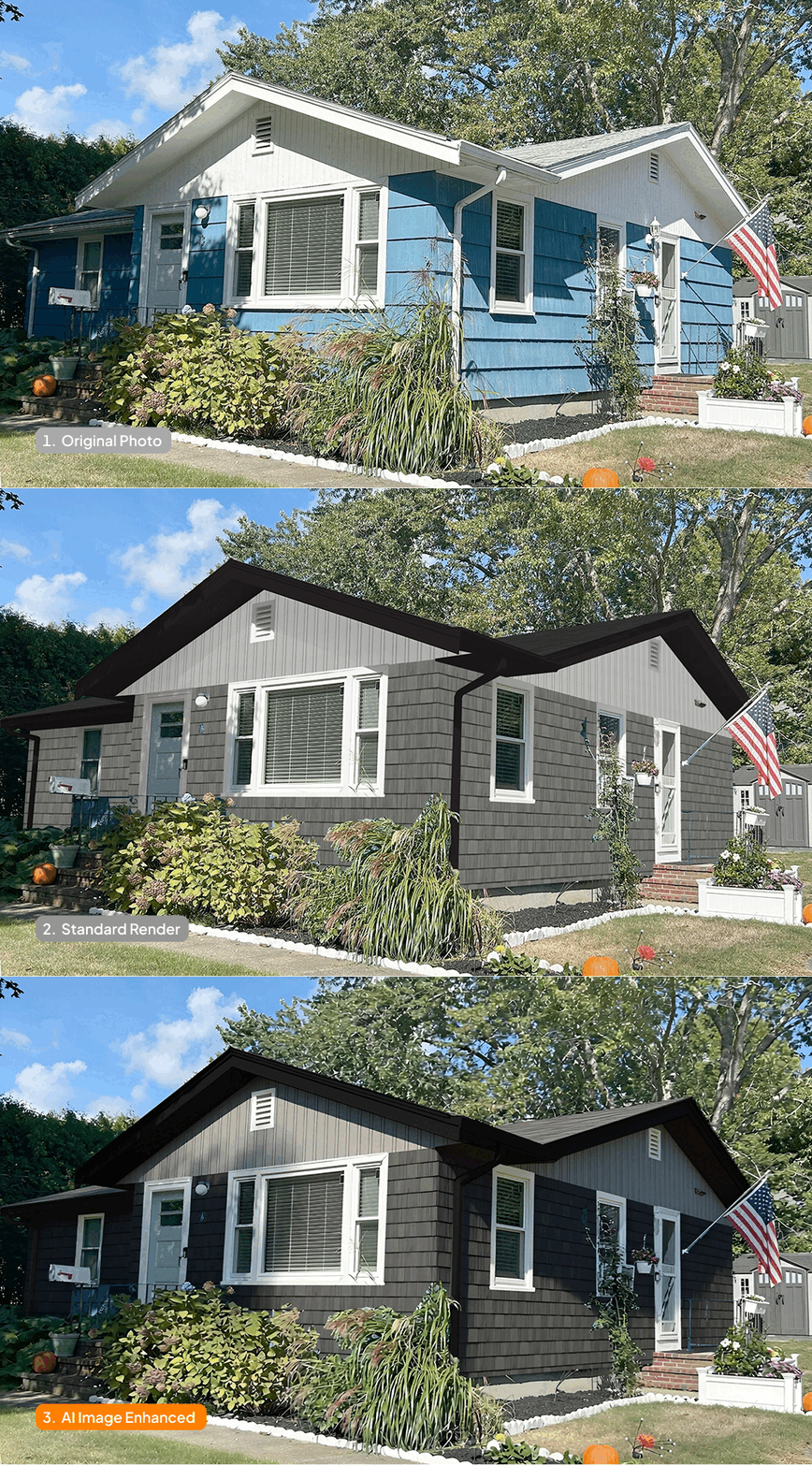
Visualize Your New Roof!
See exactly what your new roof will look like with our free visualization tool.