Your GAF Master Elite™ Experts for Roof Repair in Tampa, FL
When your Tampa roof shows signs of damage or persistent leaks, professional roof repair delivers more than patching. We diagnose the underlying failure, document the extent of damage with photo and thermal imaging evidence, execute code-compliant repairs using materials matched to your existing system, and explain what caused the breakdown so you understand how to prevent recurrence. This service is for homeowners who want transparency and technical accuracy, not quick cosmetic fixes that fail in the next storm.

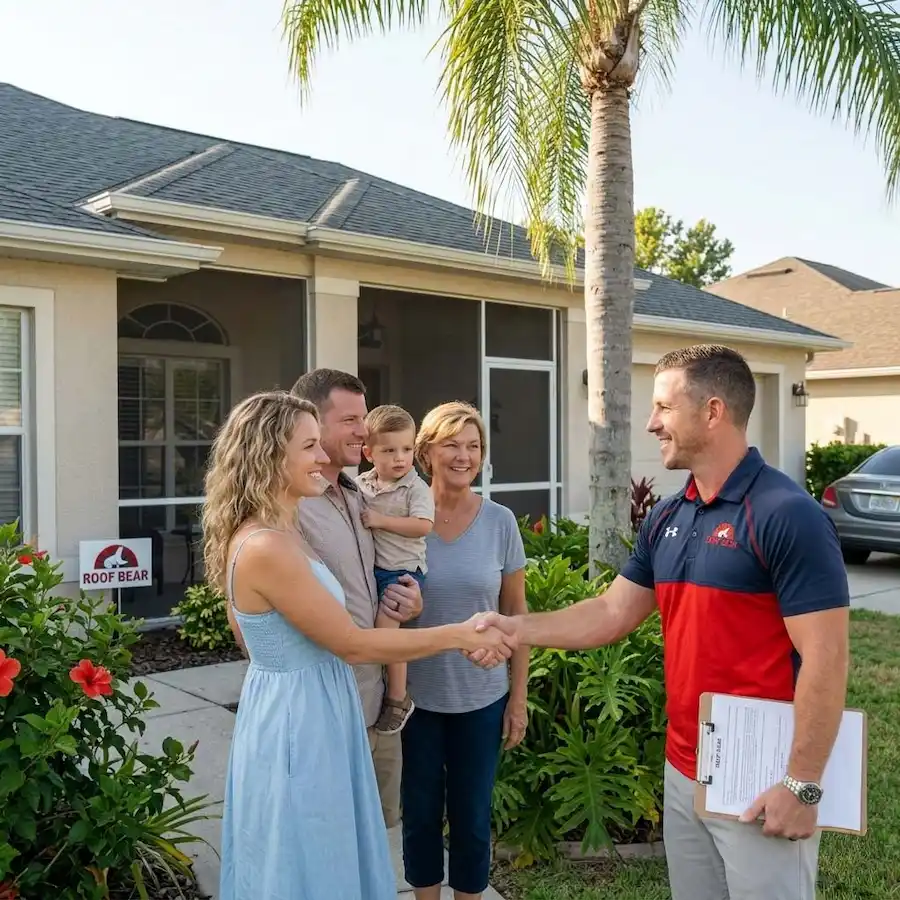
Stress-Free Roof Repairs in Tampa Start with Roof Bear
Credentials & Licensing
- GAF Master Elite® & President's Award Contractors (Top 1% in the Nation)
- Licensed Florida DBPR Certified Roofing Contractor (CCC1334010)
- GAF Commercial Certified
- GAF Solar Certified
- Owens Corning Preferred Contractor
- A+ rating with the BBB
- 14th rank on the INC. 5000
- 4.8 star Google rating with 200+ verified reviews
- Over 7,000 roof installations completed in Florida since 2020
- 100% in-house roofing team with no subcontractors

Managing Partner · Technical Oversight Lead · Veteran
Hector manages every Roof Bear repair and is personally named in dozens of customer reviews for his transparency, craftsmanship, and above-and-beyond service. GAF Master Elite® certified. Veteran-owned.
Reviewed by Hector Marin. License Number CCC1334010 held by Tyler Nerland · Verified by Florida DBPR
Why Roof Repair Fails When Done Wrong
Most Tampa roofing leaks emerge from localized failures: cracked concrete tiles absorbing rainwater, corroded flashing around chimneys and skylights, lifted shingles exposing underlayment to UV, or improperly sealed penetrations from attic vents and satellite mounts. The visible water stain on your ceiling is rarely located directly beneath the breach point. Water enters at the failure site, travels along rafters or sheathing joints, and appears feet away from the actual damage. A contractor who patches the wet spot without tracing the intrusion path leaves the root cause untouched.
Deferred repair accelerates deterioration. A single compromised tile admits moisture into the underlayment, where it saturates wood decking and promotes fungal decay. When water reaches the decking, structural damage compounds: sagging sheathing, compromised rafter bearing, and interior mold growth that migrates from attic spaces into living areas. According to research published by the Insurance Information Institute, homes with moderate to poor condition roofs have 60% higher loss costs compared to those in good condition, and roof-related claims represented over a quarter of all residential claim value in 2024, with wind and hail as the primary drivers.
Insurance claim denials often hinge on maintenance history. An adjuster who finds evidence of long-standing neglect, photographed deterioration in prior inspections, or repairs executed without permits will classify damage as pre-existing or maintenance-related rather than covered storm damage. This distinction erases tens of thousands in claim value. Homeowners who document repairs with permit records, contractor invoices, and dated photographic evidence establish a defensible timeline. We treat every repair as part of that documentation chain.

Emergency Response and Interim Protection
We offer 24/7 emergency roof repair services and respond to quote requests within 24 hours. When a storm damages your roof or a sudden leak threatens interior spaces, our first priority is arresting water intrusion. We deploy tarps anchored with battens screwed into structural members, not sandbags that shift or puncture underlayment. Tarps extend past the damaged zone by at least four feet in all directions and overlap at seams with minimum twelve-inch laps sealed with roofing mastic. Aubrey Devine wrote in a review, "With Hurricane Milton approaching, I was in a panic trying to find a roofer to repair my leak, as I'm in a Zone A flood zone. Hector responded immediately to my inquiry." We check tarped roofs after each weather event until permanent repairs are completed, documented with timestamped photos for insurance records.
Diagnostic Inspection and Documentation
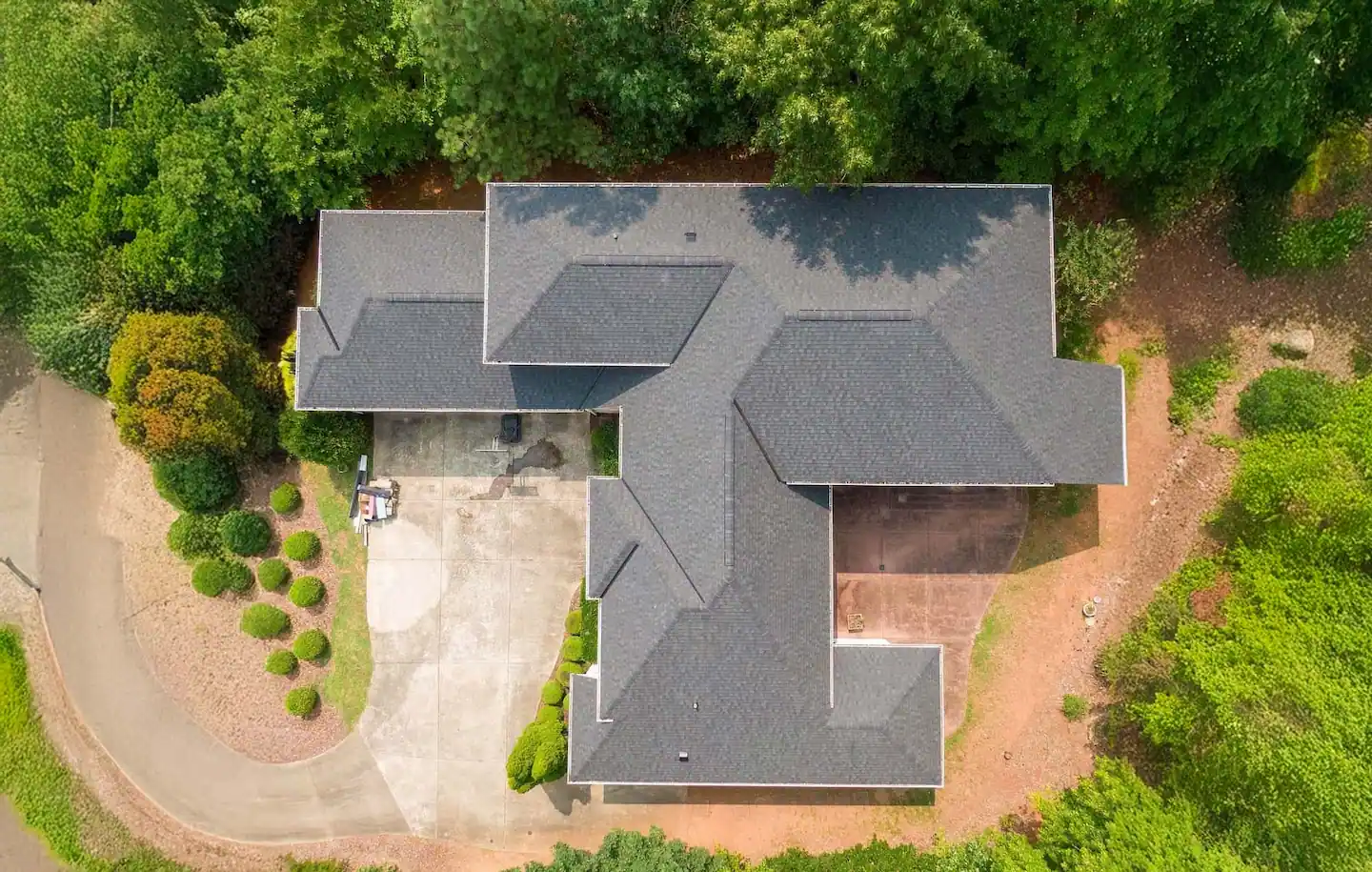
We conduct roof inspections using drone imaging for overall condition assessment and thermal imaging cameras to trace moisture intrusion paths invisible to the eye. Infrared scans reveal temperature differentials where wet insulation or saturated decking absorbs heat differently than dry material. Every inspection generates a written report with annotated photographs showing damaged components, measurements of affected areas, and material specifications for replacement items. Carl Shack noted, "He provides detailed photos and videos, clearly explaining the necessary work and the reasons behind it." We map the roof system by zone: field area, hip and ridge lines, valleys, flashing transitions, and penetrations. Each compromised element is cataloged with its material type, installation date when visible, and failure mode.
Material Matching and Code Compliance
Florida law governs when partial repairs require full roof replacement. The 2007 code took effect March 1, 2009. Roofs predating it remain subject to the full 25 percent rule in FBC-EB 706.1.1, which can trigger wholesale re-roofing. We calculate the percentage of affected area before beginning work to establish regulatory scope.
We match replacement materials to existing systems by manufacturer, profile, and color. For concrete tile roofs common in Tampa, we source tiles by weight classification and interlocking pattern, critical because mixing flat-profile tiles with high-profile units creates uneven load distribution and gaps at laps. Asphalt shingle repairs require matching the shingle weight (architectural or three-tab), granule color lot, and seal strip placement. When exact matches are unavailable due to discontinued lines, we document the substitution with product data sheets and justify the selection based on equivalent wind rating and warranty coverage. Modified bitumen repairs on flat or low-slope sections demand primer compatibility: APP (attic polypropylene) and SBS (styrene-butadiene-styrene) modified systems use different adhesives and cannot be cross-applied without delamination risk.
Flashing Replacement and Water Barrier Integration
Most leak recurrence traces to inadequate flashing at roof-to-wall transitions, valley liners, and chimney crickets. We remove damaged flashing entirely rather than caulking over corrosion. New step flashing is woven into shingle courses with minimum four-inch headlap and counterflashing embedded into masonry reglets or tucked under wall cladding, sealed with urethane sealant rated for UV exposure and thermal cycling. Skylight flashing kits include saddles that divert water around the upslope side and integrate with ice-and-water shield extending twelve inches beyond the skylight frame in all directions.
Valley flashing installations follow open or closed valley methods depending on roof pitch and tile type. Open valleys use minimum 24-gauge galvanized steel or aluminum with hemmed edges, extending at least six inches under shingles on each side. Closed valleys on tile roofs require a continuous underlayment membrane and mortar setting beds that channel water without pooling. We avoid using roof cement as a primary sealant because it hardens, cracks under thermal expansion, and provides no mechanical attachment. Fasteners penetrate only into solid decking, spaced per manufacturer wind-load tables.
Decking Repair and Structural Assessment
When roof leaks compromise wood decking, we remove damaged sheathing sections back to the nearest rafter centers. Replacement panels match the existing thickness, typically half-inch or five-eighths-inch CDX plywood or oriented strand board rated for roof sheathing (Exposure 1 or exterior grade). We sister new blocking alongside damaged rafters if bearing capacity is reduced, using dimensional lumber matching the existing rafter size and secured with through-bolted connections.
Attic ventilation must remain unobstructed during repairs. Soffit vents, ridge vents, and gable vents work as a system: intake at eaves, exhaust at peak. Blocked soffit vents trap moisture and superheated air, accelerating shingle aging and promoting mold growth on decking. We verify minimum one square foot of net free ventilation area per 150 square feet of attic space, doubling airflow in areas with radiant barriers or inadequate insulation depth.
Final Inspection and Warranty Documentation
Each completed repair undergoes a final walkthrough with the property owner. We demonstrate water flow paths, show how new components integrate with the existing system, and explain maintenance intervals. You receive a written scope-of-work summary listing materials installed by manufacturer name and model number, permit numbers for work requiring Building Department approval in Hillsborough County, and warranty coverage specifics. Our roof warranties range from 25 to 50 years depending on material type. Manufacturer material warranties transfer with property sale when documented; workmanship warranties cover installation defects and remain valid as long as the roof system is maintained per manufacturer guidelines. We provide digital copies of all inspection photos, thermal scans, and permit documents for your insurance and real estate records.
Florida Building Standards and Wind Performance
The Florida Building Code prescribes roof system testing for high-velocity hurricane zones, which include all of Tampa and Hillsborough County. After the pre-determined air pressure is reached, water is sprayed on the panels for a duration of 15 minutes, per testing standards described by Sheffield Metals. Many metal roofs are rated up to 150 miles per hour, the equivalent of a major Category 4 hurricane and an F2 tornado, according to a continuing education course published by BNP Media.
Impact resistance classifications under UL 2218 range from Class 1 through Class 4, with Class 4 being the toughest and least likely to fail when in contact with objects, as noted by Sheffield Metals. Class 4 shingles withstand two-inch steel balls dropped from specified heights without cracking, granule loss, or tearing. Tampa homeowners installing Class 4-rated roofing materials often qualify for wind mitigation credits that reduce insurance premiums. We document impact ratings and wind uplift certifications in every installation packet so you can submit the forms to your insurer and verify the credit at renewal.
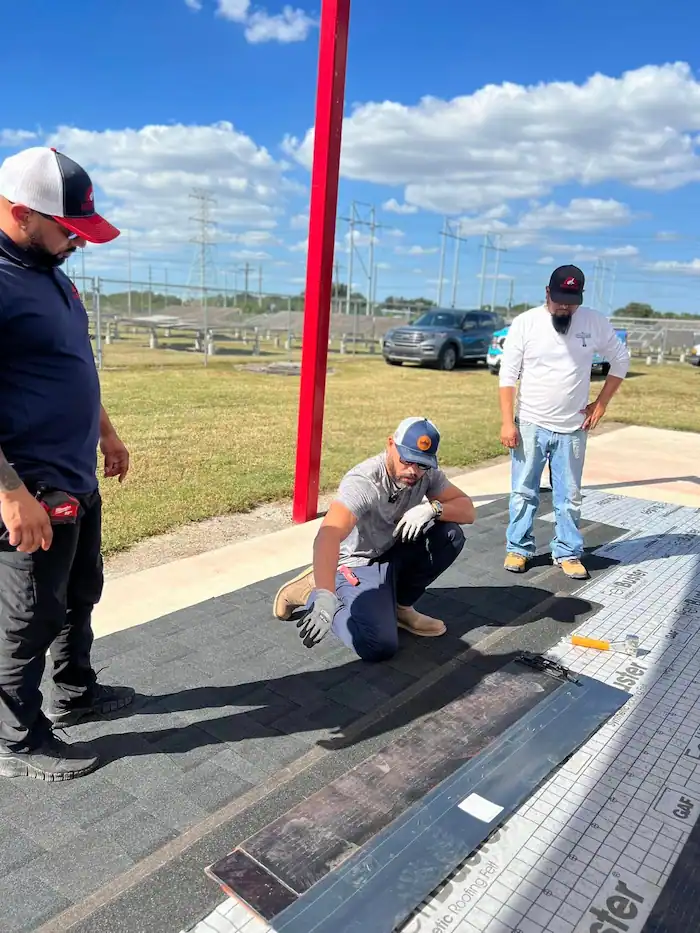
Get a FREE Quote Today!
Our team of friendly experts can assess the needs of your home and provide you with the knowledge you need to make informed decisions.

Award-Winning Florida Roofing Company




Frequently Asked Questions About Roof Repair in Tampa
What is the average cost to repair a roof in Florida?
Roof repair costs vary widely based on damage extent, material type, and accessibility. Minor repairs such as replacing a few damaged shingles or resealing flashing may cost a few hundred dollars. Larger repairs involving decking replacement, extensive tile work, or structural fixes can range from several hundred to several thousand dollars. We provide detailed written estimates after inspection so you understand exactly what the scope includes and why each component is necessary.
What is the 25% roof rule in Florida?
Florida Statutes 553.844(5) governs when partial roof repairs trigger full code compliance. Roofs predating the 2007 code (which took effect March 1, 2009) remain subject to the full 25 percent rule in FBC-EB 706.1.1, which may require bringing the entire roof up to current standards when the repair exceeds the threshold. We calculate the percentage of affected area during inspection and explain the regulatory path before starting work.
Can a handyman do roof repairs in Florida?
No. Handyman exemptions do not extend to roofing because the work involves life safety, structural integrity, and weather protection. Unlicensed roof work voids manufacturer warranties, disqualifies insurance claims, and exposes property owners to liability if the worker is injured. Our license number is CCC1334010.
What is the typical cost to replace a roof in Tampa, Florida?
For a full roof replacement in Tampa, homeowners can expect to invest anywhere from $8,000 to $20,000 or more, depending on roof size, material choice, pitch complexity, and structural condition. For a 1500 square foot house, a standing-seam metal roof could cost between $14,000 and $25,000. Tile roofing (clay or concrete) for the same size would likely start around $18,000. Using standard architectural asphalt shingles, the cost might range from approximately $7,500 to $12,000. These figures reflect material quality, permit fees, disposal costs, and warranty coverage. We provide itemized proposals showing cost breakdowns by category so you can evaluate options clearly.
Get Your Roof Repaired the Right Way
Roof Bear LLC serves Tampa and the surrounding Tampa Bay area with licensed, in-house crews and diagnostic transparency that turns repair from crisis into informed partnership. We document what failed, explain why it happened, and build repairs that integrate with your existing system under Florida code requirements. Call us at (813) 921-1986 or request a free inspection online. We will respond within 24 hours with a detailed assessment and a clear path forward.
Service Area
We serve Tampa, St Petersburg, Clearwater, Brandon, Lutz, Wesley Chapel, Plant City, Palm Harbor, Safety Harbor, Carrollton, and surrounding communities throughout the Tampa Bay area in Hillsborough County and beyond. Our crews respond to emergency calls across the region and schedule non-urgent repairs within days of initial contact.
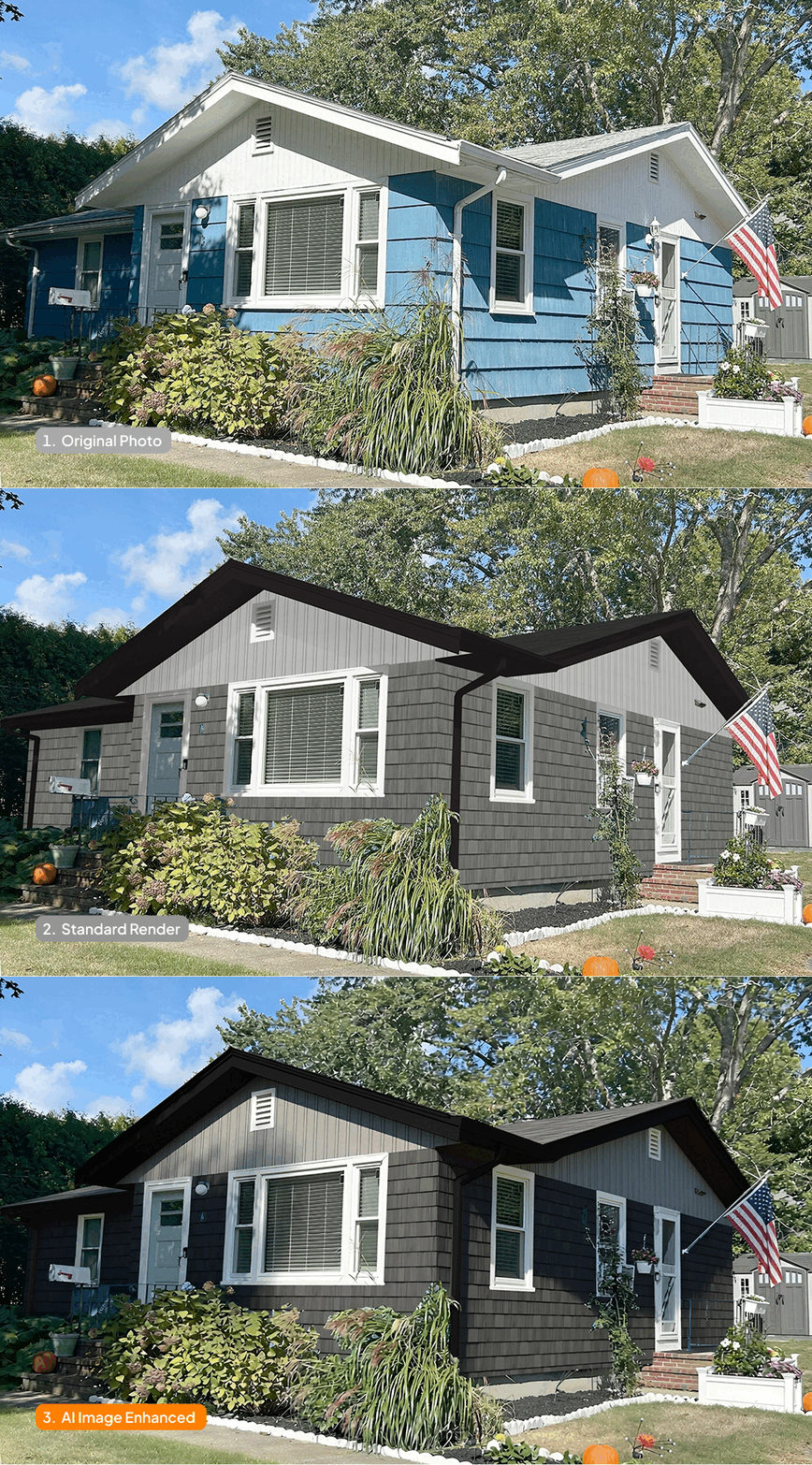
Visualize Your New Roof!
See exactly what your new roof will look like with our free visualization tool.