
Trusted Roofers Serving Daytona Beach, FL

Roof Bear provides licensed roofing service in Daytona Beach and Volusia County, from emergency storm tarping and leak repair through full tear-off replacement.


Coastal Roofing Support for Daytona Beach
- Florida license CCC1334010 held by Tyler Nerland
- GAF Master Elite® and President's Award Contractors (Top 1% in the Nation)
- GAF Commercial Certified and GAF Solar Certified
- Owens Corning Preferred Contractor
- 4.8 stars across 200+ Google reviews
- Over 7,000 roof installations completed in Florida
- In-house team with no subcontractors

Managing Partner · Technical Oversight Lead · Veteran
Hector's crews are professionally trained direct employees of Roof Bear who perform all Daytona Beach roofing work. Hector himself is personally named in dozens of customer reviews for his transparency, craftsmanship, and above-and-beyond service.
Reviewed by Hector Marin. License Number CCC1334010 held by Tyler Nerland · Verified by Florida DBPR
Why Daytona Beach Roofs Fail Under Florida's Accelerating Storm Cycle
From 1980 through 2024, Florida sustained 94 confirmed weather disasters exceeding $1 billion each, according to the National Centers for Environmental Information. The annual average has climbed from 2.1 billion-dollar events over that 44-year span to 6.8 events during the five years from 2020 through 2024. Hurricane Helene struck Perry as a Category 4 storm with 140 mph winds in September 2024, the strongest hurricane ever recorded in the Big Bend region, causing $78.7 billion in damages and 219 deaths. Six weeks later Hurricane Milton made landfall near Siesta Key as a Category 3 hurricane, adding another $34.3 billion in damages and 32 deaths. In 2022, Hurricane Ian delivered 150 mph sustained winds near Cayo Costa, resulting in $119.6 billion in damages and 152 deaths.
Coastal exposure in Daytona Beach means wind-driven rain penetrates worn sealant, lifts granule-depleted shingles, and saturates roof decking before visible interior damage appears. Attic ventilation pulls moisture into cavity spaces where it softens plywood and promotes mold colonization. Fascia rot begins where clogged gutters overflow against trim boards. What presents as a ceiling stain in one room often represents compromised decking across multiple rafter bays, and by the time water appears inside, the repair envelope has doubled. Delayed response converts a manageable shingle replacement into a structural tear-off with plywood substrate work, permits, and extended weather exposure during construction.
Storm chasers flood the market after each named event, canvassing neighborhoods with pressure tactics and work authorization forms that lock homeowners into contingency agreements before diagnostics occur. These operators disappear when the insurance dispute drags into arbitration. The choice between the two often determines whether the roof performs through the next storm or fails again within 18 months.
Our Custom Roofing Services
Roof Repair
Roof Replacement
Roof Inspection
Commercial Roofing
Storm Damage Roof Repair
Emergency Roof Repair
Metal Roofing
Asphalt Shingles
Tile Roofing
Award-Winning Florida Roofing Company




Get a FREE Quote Today!
Our team of friendly experts can assess the needs of your home and provide you with the knowledge you need to make informed decisions.


GAF Energy Roof Installations
Like the idea of solar but worry about roof strength during Florida storms? Solar shingles solve that by integrating directly into a durable roofing system that protects your home while generating clean energy. As roofing experts and certified GAF Energy installers, Roof Bear can build a roof that’s both storm-ready and energy-producing.

Reduce Bills by up to 50%
GAF Roofing Materials and Insulation seals your home like no other product on the market. We have seen this reduce energy bills by up to 50%!
Built for Florida
Our systems are designed and installed to handle Florida’s demanding weather while protecting your home for decades.
Roofing Experts + Solar Specialists
Roof Bear is a licensed roofing contractor and certified GAF Energy installer—so your system is installed the right way from the roof up.

Hear From Our Customers

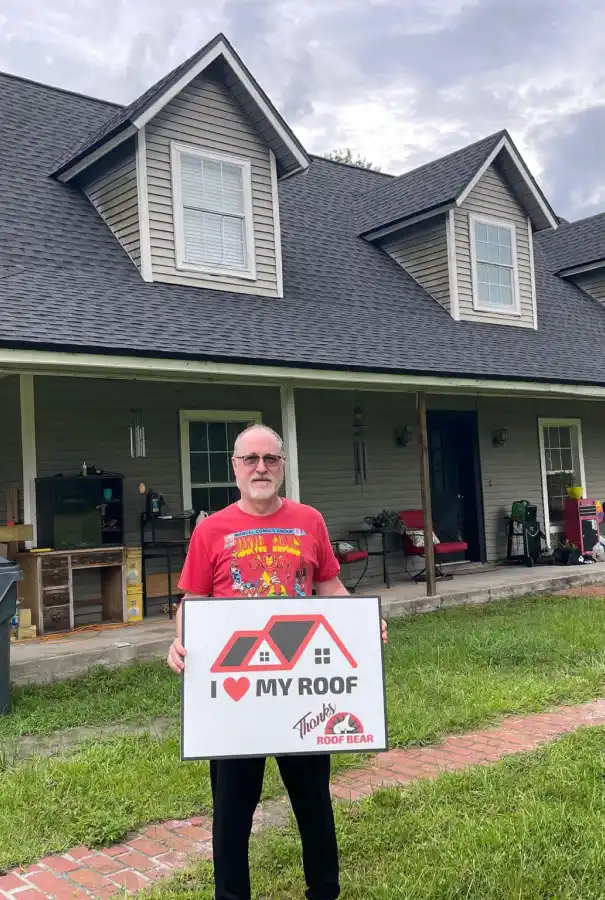
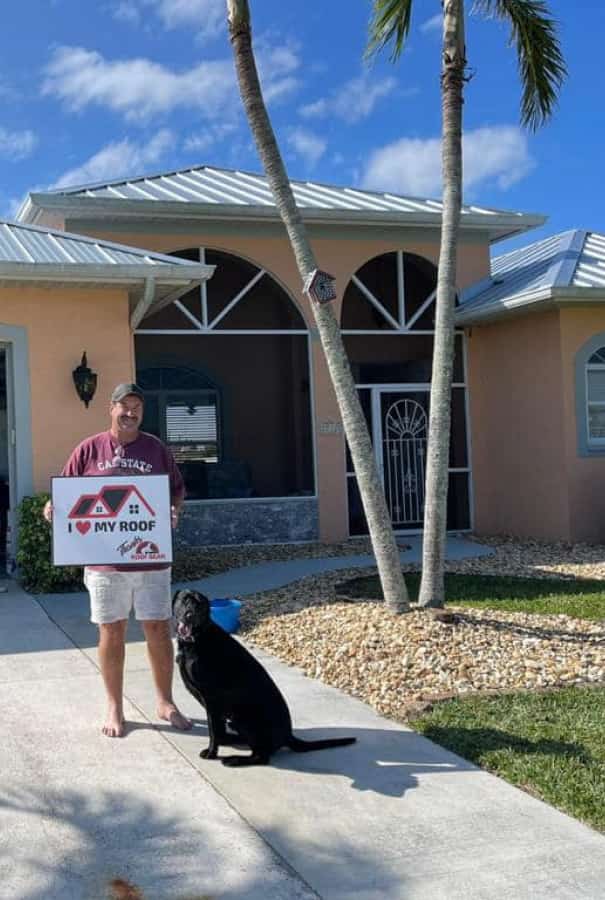
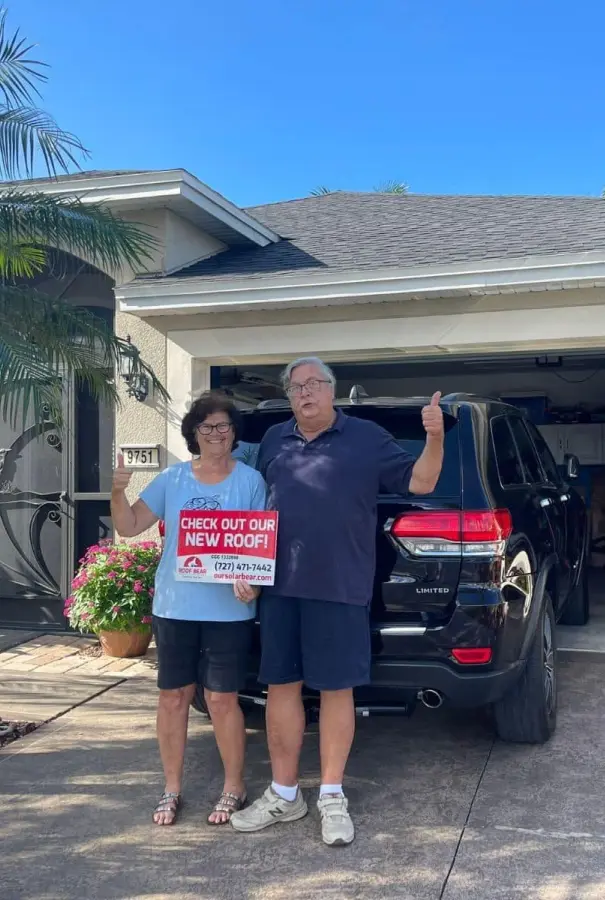
1. Diagnostic Inspection and Moisture Mapping
We begin every engagement with a roof and attic inspection that documents current condition with photo and video evidence. Our crews access the roof plane to check fastener withdrawal, examine flashing integrity at penetrations and valleys, and test sealant at vent boots and ridge caps. When interior staining is present but the leak source is not visible from above, we deploy infrared cameras to trace moisture pathways through the roof deck and locate concealed saturation in sheathing and insulation. Neil Allen wrote in a review: "Since there was no visual evidence of a leak, they brought out an infrared camera to detect moisture. Within minutes, they pinpointed the exact location of the leak." The inspection report includes material identification, measured defects, code compliance notes, and a written scope distinguishing cosmetic wear from structural compromise. This documentation supports insurance claims and provides the detail adjusters require to approve coverage.
2. Emergency Stabilization and Tarping Protocol
When storm damage creates an active leak and replacement lead time stretches beyond the forecast window, we deploy reinforced tarps anchored with sandbags or fastened to sound decking with counter-battens. The tarp extends at minimum two feet beyond the damaged zone in all directions and overlaps the ridge or terminates below a ridge vent to prevent wind uplift. We return after each weather event to inspect tarp security and reposition anchors where necessary. Stephanie Craig described the process: "They were the only company that tarped the roof (checked on it multiple times and through a storm) before giving me an estimate. Others were quick to give me a price but had no concern about the leak!" Emergency tarping prevents secondary water damage to ceilings, insulation, and interior finishes while permitting, material orders, and insurance coordination proceed. Our 24/7 emergency service handles urgent calls within hours, not days.
3. Permit Application and Code Compliance Review
All roof replacement work in Daytona Beach requires a building permit issued by the Volusia County Building Department or the municipal authority with jurisdiction. We prepare and submit permit applications with engineered drawings, wind load calculations, and material specification sheets that satisfy the Florida Building Code, 8th Edition, effective December 31, 2023, per the Florida Building Commission. Florida Statutes 553.844(5) provides a repair threshold: if an existing roof was built, repaired, or replaced under the 2007 Florida Building Code or later, and 25 percent or more of that roof system is being repaired or replaced, only the affected portion must meet current code. Roofs predating March 1, 2009 remain subject to full code upgrade when the work exceeds the 25 percent threshold. We calculate the percentage by roof section area, document the finding in the permit set, and notify the property owner before bidding so that upgrade costs appear in the estimate rather than as change orders mid-construction.
4. Material Selection and Wind Rating Verification
We install GAF asphalt shingles, CertainTeed shingles, Owens Corning shingles, architectural shingles, impact-resistant shingles, energy-efficient cool roof shingles, standing seam metal roof systems, 5V Crimp metal roofing, corrugated metal roofing, metal shingle roofs, metal tile roofing, Galvalume steel roofing, galvanized steel roofing, aluminum roofing, stone-coated steel roofing, clay tile roofs, concrete tile roofs, TPO roofing systems, EPDM roofing, and modified bitumen roofing. Every product carries a Miami-Dade Notice of Acceptance or Florida Product Approval that certifies its performance under high velocity hurricane zone wind loads. Metal roofing systems rated to 150 mph, the equivalent of a major Category 4 hurricane, rely on concealed clip attachment at 12-inch centers with thermal expansion slots that prevent panel buckling during temperature swings. Standing seam panels fasten to the roof deck through floating clips that allow longitudinal movement without stressing the seam crimp or the fastener penetration. Metal expands and contracts with temperature swings, so proper fastening and clip spacing are critical to prevent oil-canning and panel separation during high wind events.
5. Tear-Off, Decking Inspection, and Substrate Repair
Full replacement begins with complete removal of existing shingles, underlayment, and flashing down to bare decking. Our crews inspect every sheet of roof sheathing for delamination, rot, and fastener failure. Any plywood or OSB panel exhibiting spongy texture, visible mold, or fastener pull-through is marked and replaced with CDX plywood meeting span ratings for the rafter spacing. We install Ice and Water Shield self-adhering membrane across the entire roof deck in high-wind coastal zones, extending coverage from eave to ridge rather than limiting it to the bottom three feet. This fully adhered waterproofing layer prevents wind-driven rain from entering the building envelope even when shingles are lifted or lost. Proper roof decking attachment is verified: 8d ring-shank nails at six inches on center along panel edges and 12 inches in the field, driven flush without overdriving into the rafter or truss.
6. Ventilation Design and Attic Airflow Verification
Balanced roof ventilation requires one square foot of net free vent area for every 150 square feet of attic floor, split equally between intake vents at the eaves and exhaust vents at or near the ridge. We calculate existing vent area, measure attic temperature during the inspection, and add intake or exhaust capacity where the ratio is out of balance. Soffit vents must remain unobstructed by insulation baffles that maintain a clear air channel from eave to ridge. Ridge vents install with external baffles that prevent rain infiltration and internal baffles that block insulation from migrating into the vent cavity. Poor attic ventilation accelerates shingle aging, increases cooling costs, and traps moisture that degrades roof decking from below.
7. Shingle Installation and Fastener Schedule Compliance
Asphalt shingle application begins with a starter strip along the eave that provides an adhesive surface for the first course and prevents wind uplift at the roof edge. Each three-tab or architectural shingle receives six fasteners located above the adhesive line and positioned to penetrate the overlapping shingle above, creating a dual mechanical lock. In high-wind zones we increase the fastener count to six per shingle and add a sixth nail in the upper corner of each end shingle on every course. All fasteners are 1.25-inch minimum shank diameter galvanized roofing nails driven perpendicular to the deck with pneumatic pressure calibrated to seat the head flush without cutting the shingle mat. Hand-sealing of shingle tabs with roofing cement is not a substitute for proper nailing and voids the manufacturer's wind warranty.
8. Flashing Installation at Penetrations and Transitions
Roof penetrations for plumbing vents, exhaust fans, and skylights receive individual flashing assemblies that integrate with the underlayment and shed water over the shingle surface. Vent pipe flashings are one-piece spun aluminum or galvanized steel boots with a neoprene collar that clamps around the pipe. The base flange slides beneath the upslope shingles and lays over the downslope course, creating a shingled overlap that directs water away from the opening. Valley flashing in open-valley installations uses pre-formed metal channels at least 24 inches wide, centered on the valley centerline and fastened along the outer edges only. Closed valleys weave or cut shingles over Ice and Water Shield but omit the metal, relying instead on the self-adhering membrane for waterproofing. We prefer open metal valleys in high-debris environments where leaves and pine needles accumulate, because the smooth metal surface sheds debris more readily than woven shingles.
9. Final Inspection, Debris Removal, and Warranty Registration
Completed installations undergo a final walkdown by our project lead and a separate inspection by Volusia County or municipal building officials who verify code compliance, fastener patterns, flashing integration, and ventilation capacity. We remove all jobsite debris, deploy magnetic sweepers to collect roofing nails from driveways and landscaping, and confirm that dumpsters leave the property before final payment. Manufacturer warranty registration occurs within 30 days of substantial completion and requires submission of installation photos, material invoices, and the building permit sign-off. Our roof warranties range from 25 to 50 years on materials, and we provide a 30-year shingle warranty on qualifying GAF systems installed under our Master Elite status. Workmanship coverage spans the labor and installation defects for one year from project completion.
Florida Building Code and Storm Performance Standards
The Florida Building Code, 8th Edition took effect December 31, 2023, and establishes minimum design wind speeds, fastener schedules, and underlayment requirements that reflect the state's hurricane exposure. Florida Statutes 553.844(5) clarifies that roofs originally constructed under the 2007 code or later may undergo partial repair or replacement without triggering full code upgrades, provided the work affects less than 25 percent of the roof system. Roofs predating March 1, 2009, when the 2007 code took effect, must meet current standards when the repair threshold is exceeded. This statutory distinction determines whether a project proceeds as a patch or becomes a full tear-off with re-engineering and permit review.
Metal roofing performance in high-wind zones depends on panel profile, fastener type, and clip spacing. According to continuing education materials published by BNP Media, many metal roofs are rated up to 150 miles per hour, the equivalent of a major Category 4 hurricane and an F2 tornado. Pressure testing under ASTM E 1592 evaluates panel assemblies in chambers up to 12 feet by 24 feet, subjecting them to negative and positive pressure cycles that simulate wind uplift and internal pressurization. Some roofing systems have survived test pressures of 400 psf in UL testing, far exceeding the design loads required by code, per Building Enclosure. These laboratory standards validate the specifications we reference when selecting materials for coastal installations.
What Solar Bear Customers Say
"With Hurricane Milton approaching, I was in a panic trying to find a roofer to repair my leak, as I'm in a Zone A flood zone. Hector responded immediately to my inquiry, and told me he could be out next day. He came out, assessed my roof, showed me videos and photos along the way to educate me on what was happening, and was able to repair it before the storm."
Aubrey Devine
"Rich DeCola from Roof Bear was the only rep that did a very detailed inspection and offered to place a tarp over the leak held down by eight sand bags that I already had. This saved us from further water damage during Hurricane Helene. Obviously, I chose Roof Bear to install the new roof. It took only one day for the team to tear off the old and install the new! It looks great! The following week, we were hit with Hurricane Milton, 102 mph winds, new roof sustained NO DAMAGES!!"
Deborah Acord Bell
"After the hurricane we had TEN different roofing companies come out to give estimates. 8 out of those 10 companies (storm chasers) required that we sign a 'work authorization form' which I later learned is a scammy way of them getting to control the insurance claim to get more money. Roof Bear was 1 of the 2 companies that did NOT require anything to be signed nor did they ever even bring up my insurance claim."
Jessica Ellis
Service Area
We serve Daytona Beach, Daytona Beach Shores, South Daytona, Holly Hill, Ormond Beach, Port Orange, Ponce Inlet, New Smyrna Beach, Palm Coast, and all of Volusia County. Our dispatch operates from Central Florida and responds to emergency calls across the region within 24 hours.
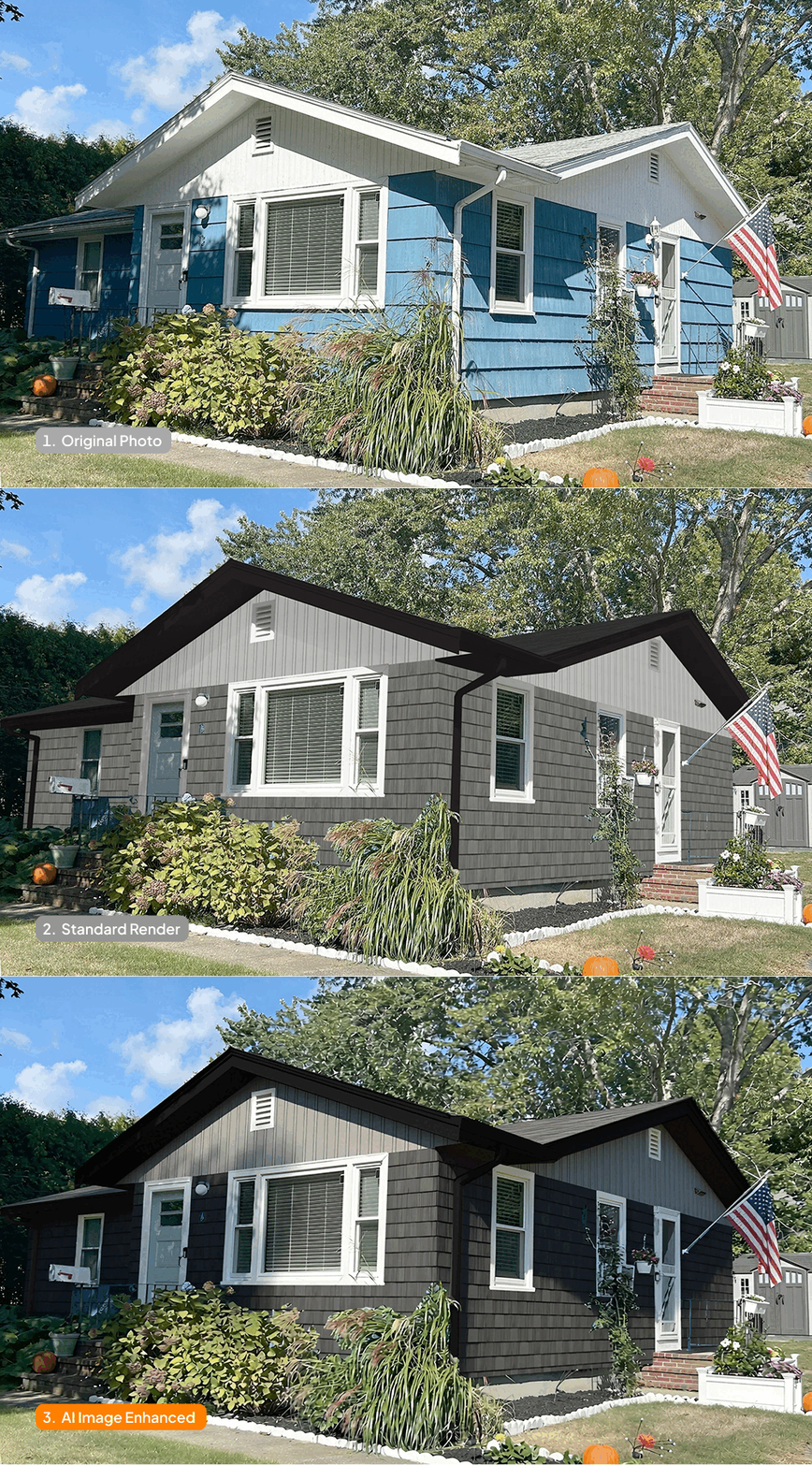
Visualize Your New Roof!
See exactly what your new roof will look like with our free visualization tool.
Daytona Beach Roofing FAQs
Who are some good roofers in Daytona Beach?
Roof Bear holds Florida license CCC1334010, operates as a GAF Master Elite contractor (top 1% nationally), maintains an A+ Better Business Bureau rating, and has completed over 7,000 installations across Florida with 48 in-house employees. We respond within 24 hours, provide free inspections paired with repair or replacement quotes, and carry certifications from GAF, Owens Corning, and multiple manufacturers. Our 4.8-star rating across 200+ Google reviews reflects consistent performance and diagnostic transparency. When evaluating roofers, verify active licensure with the Florida Department of Business and Professional Regulation, confirm they carry general liability and workers' compensation insurance, and request references from recent storm repair projects with documented building permit approvals.
What is the average cost of replacing a roof in Florida?
For a typical 1500 square foot home in Florida, architectural asphalt shingles run approximately $7,500 to $12,000, while standing seam metal costs between $14,000 and $25,000, and tile roofing starts around $18,000. These figures include tear-off, new underlayment, flashing, ventilation upgrades, permit fees, and debris removal. Costs rise when plywood replacement is required, when the roof carries multiple penetrations or complex valleys, or when HOA approval mandates specific tile profiles or metal finishes. Insurance claims cover storm damage minus the deductible, but cosmetic wear and deferred maintenance fall to the property owner. We provide written estimates within 24 hours of the initial inspection, and financing starts at $0 down with approved credit.
What is the 25% roof rule in Florida?
The 25% rule refers to Florida Statutes 553.844(5), which states that if an existing roof was built, repaired, or replaced under the 2007 Florida Building Code or later editions, and 25 percent or more of that roof system is being repaired or replaced, only the affected portion must comply with current code standards. Roofs constructed before that date remain subject to full code upgrades when repair work exceeds the 25 percent threshold. Percentage is calculated by roof section area, not cost. This rule determines whether a project proceeds as a patch under grandfathered standards or triggers a full tear-off with re-engineering, updated wind load compliance, and additional permit review.
Schedule Your Daytona Beach Roof Inspection
Roof Bear provides licensed roofing service across Daytona Beach and Volusia County, from emergency tarping and leak repair through full tear-off replacement with code-compliant permitting and manufacturer warranty registration. We respond within 24 hours, and financing starts at $0 down with approved credit.
